
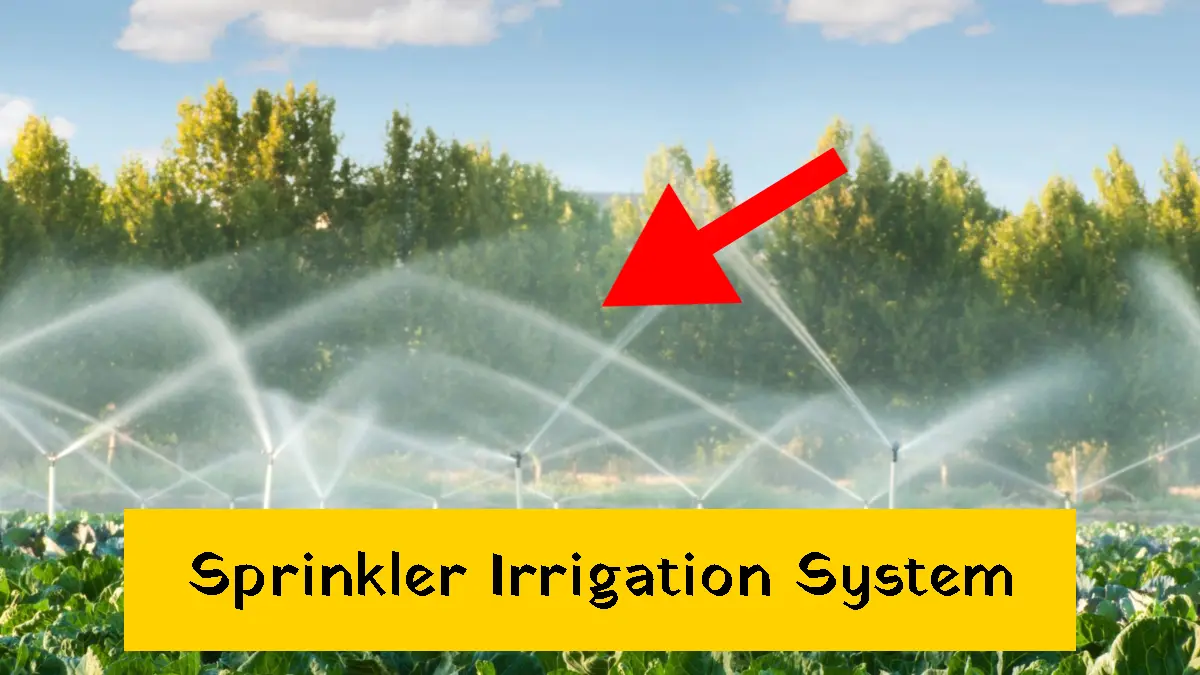
A sprinkler irrigation system, designed and installed according to standard procedures and operated within set parameters, requires low maintenance. The block and pipe layout (map) should be understood. As mentioned in Unit 1, there are various symbols in an irrigation design plan to indicate the position of pipes and other components. Usually, a key is provided with the symbols and their meanings. A table on the irrigation design plan provides information on individual irrigation blocks, including size, plant spacing, emitter distribution, and application rate. The best place to start an irrigation plan is near a pump station or the main line.
Session 1: Installation of Components in Sprinkler Irrigation System
Tests for installation:
- Find out if the design or sketch of the designated plot is ready.
- Also see if the physical condition of that site (area) matches the dimensions mentioned in the plan.
- Check if all the tools, materials, and fittings required for installation are available.
- Find out if the trenching (making a ditch) is ready according to the design and pipe specifications.
Tools and Equipment Required for Installation
The following tools and equipment are required for the installation of a micro-irrigation system:
- (i) Pipe wrench (18″, 24″ or 36″)
- (ii) Spanner-pana set (preferably adjustable wrench)
- (iii) Drill machine with various sizes of drill bits
- (iv) Drill guide
- (v) Screwdriver and Pliers
- (vi) Hacksaw blade, frame, and an extra blade
- (vii) Measuring tape and scale
- (viii) Straight and ejecto chisel
- (ix) Hand chisel
Pressure Gauge and Fittings
Pressure Gauge: It is used to measure the operating pressure of the sprinkler system. To ensure uniformity in water application, the sprinkler system operates at a desired pressure.
Lateral Cock, Elbow, Tee, Reducing Joiner, and End Cap: Bends and elbows are used to change the direction of water. Tees are T-shaped pipe fittings that have two outlets at 90 degrees connected to the main line. A reducer is a component used to reduce the pipe size from a large to a small bore. A butterfly valve is a quarter-turn rotary motion valve used to stop, regulate, and start the flow of water. An end cap is used to turn the pipe into two holes to stop the water flow. A goof plug can be used to close those holes from where emitters have been removed.
Installation of Main Control Part
A cemented platform is required for the installation of the main control part. The size of the platform depends on the various components to be installed, such as pump, bypass mechanism, non-return valve, hydrocarbon filter, fertigation unit, media filter, screen or disk filter, and air release valve. A layer of paint is used on these fittings to avoid rusting.
Preparation of Trenches
Trenches should be wide enough to allow easy handling of pipes. They should be deep enough to allow 60 cm of cover on the pipes. The bottom of the trenches should be smooth. All large stones that can damage the pipe should be removed from the edge of the ditch. The width of the trench should be 45–70 cm and the depth 75 cm. Trenches should be dug in a straight line.
Installation of Pipes and Valves
The size and class of PVC pipes should be kept as specified in the design. PVC pipes should be cleaned with sandpaper and a dry cloth before applying solvent cement. Solvent cement should be applied uniformly around the spigot end of each pipe. Use Teflon tape to avoid leakage from threaded ends. Avoid over-tightening these fittings with a pipe wrench.
Valve Installation: Air valves on the main line should always be installed at the highest point of the pipeline or at the point of change in slope. The control valve should be installed at least one foot above ground level and should be both upright and horizontal.
Frequently Asked Questions (FAQs)
What is a pressure gauge used for?
It is used to measure the water pressure in the sprinkler system so that water is spread evenly.
What is a reducer in a pipe system?
A reducer is used to join a large pipe with a smaller pipe.
How deep should the pipe trenches be?
The depth of the trenches should be 75 cm to keep the pipes safe.
Why do we use Teflon tape?
Teflon tape is used on the threads of pipes to stop water from leaking at the joints.
Where should the air valve be placed?
The air valve must be placed at the highest point of the pipeline.
What tools are needed to cut the pipes?
A hacksaw with a sharp blade is used to cut the pipes during installation.